Hala Bira, Pwera Pasma! Viva Sto. Niño!
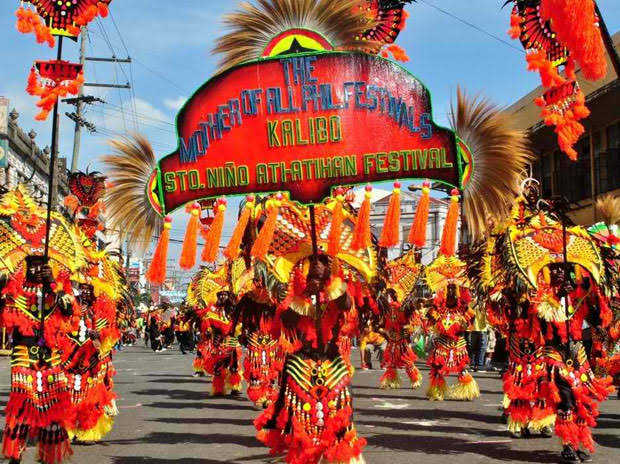
Third Week. Month of January. Kalibo, Aklan. Mark your calenders and get ready to experience the Mother of All Philippine Festivals at its finest!
• This is not your ordinary celebration.
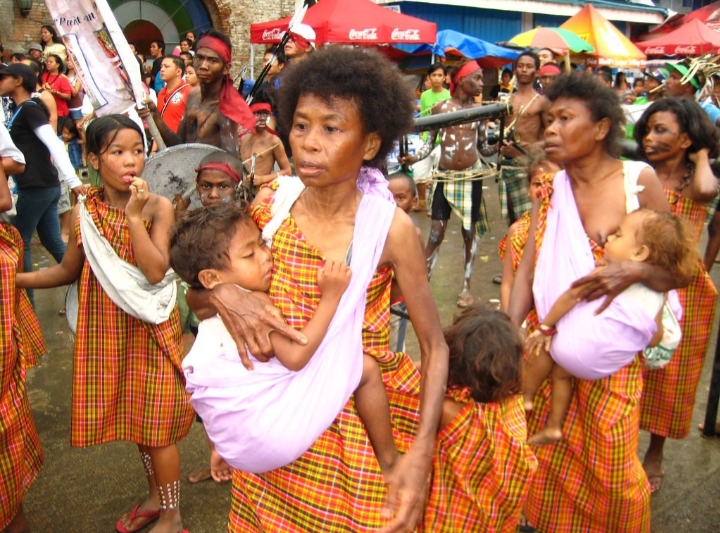
Being one of the most popular country event where people gather to celebrate, the Ati-atihan festival is a three to seven day celebration held annually in honor of the Santo Niño (Infant Jesus) who the locals deem with utmost respect and reverence. The word Ati-atihan means to be like Atis or to make believe Atis, which corresponds to the early Aeta aborigine settlers in Panay Island. These people are characterized by their short height, dark skin and frizzy hair as we imagine them to be.
• Here’s how the story went.
On the year 1975, a Catholic priest Msgr. Jose Iturralde wrote that the origin of the festival could be traced from an old fishermen couple living in the western part of Aklan in the 1700s.
A fisherman went home in dismay after catching only a piece of wood on the river. He tried throwing it away, but then the wood would reappear repeatedly to his net everytime. He finally decided to burn it as fuel to cook their meal; what they found the next day were not ashes but the wood carved like a child.
He placed the wood on their altar and from then on, his family began receiving blessings, including good fish harvests. After a few weeks, he sought a priest who advised him to place the wood in the Ibarajay Parish Church. However, the wood would always be missing and found at the roof of the fisherman’s house.
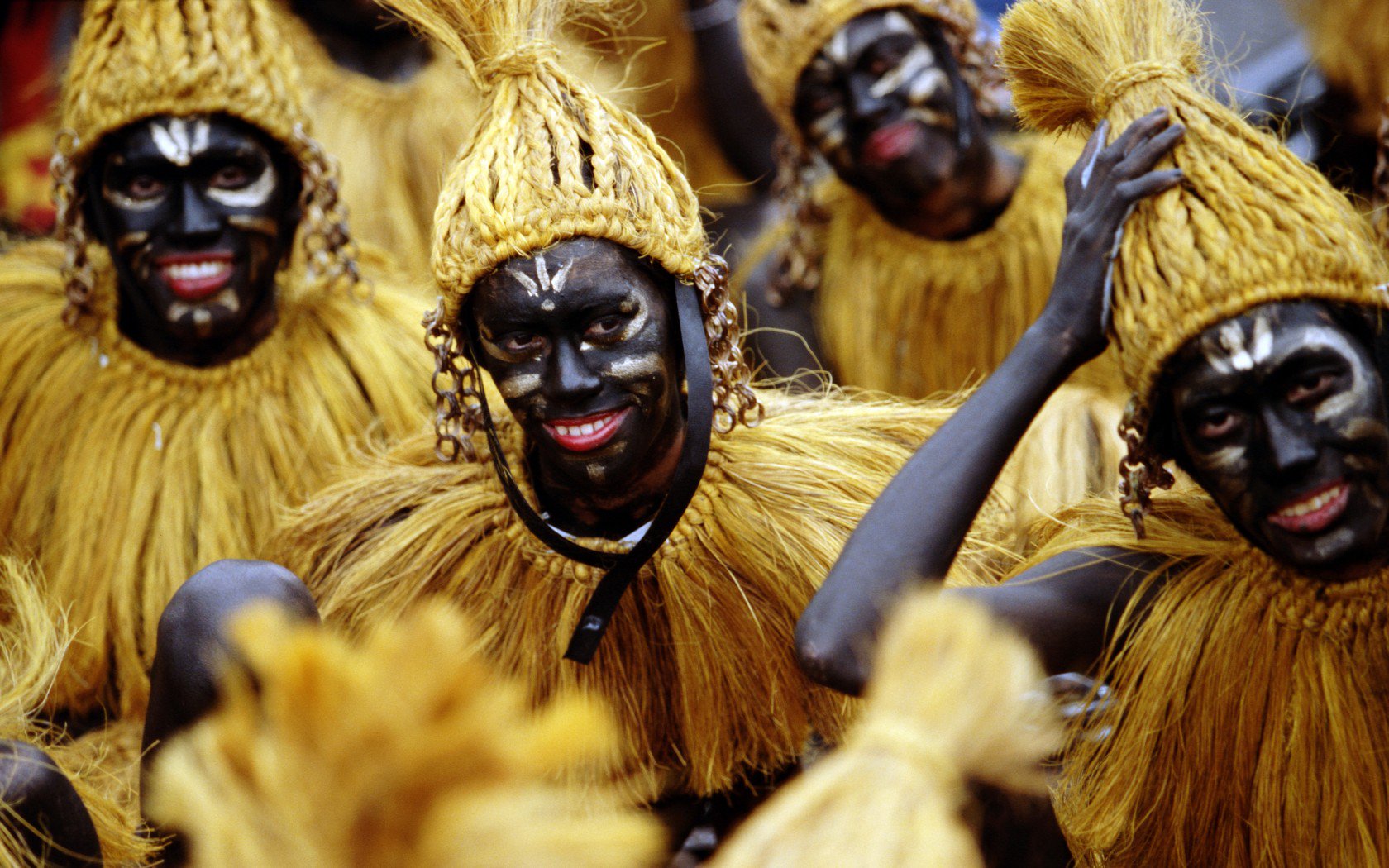
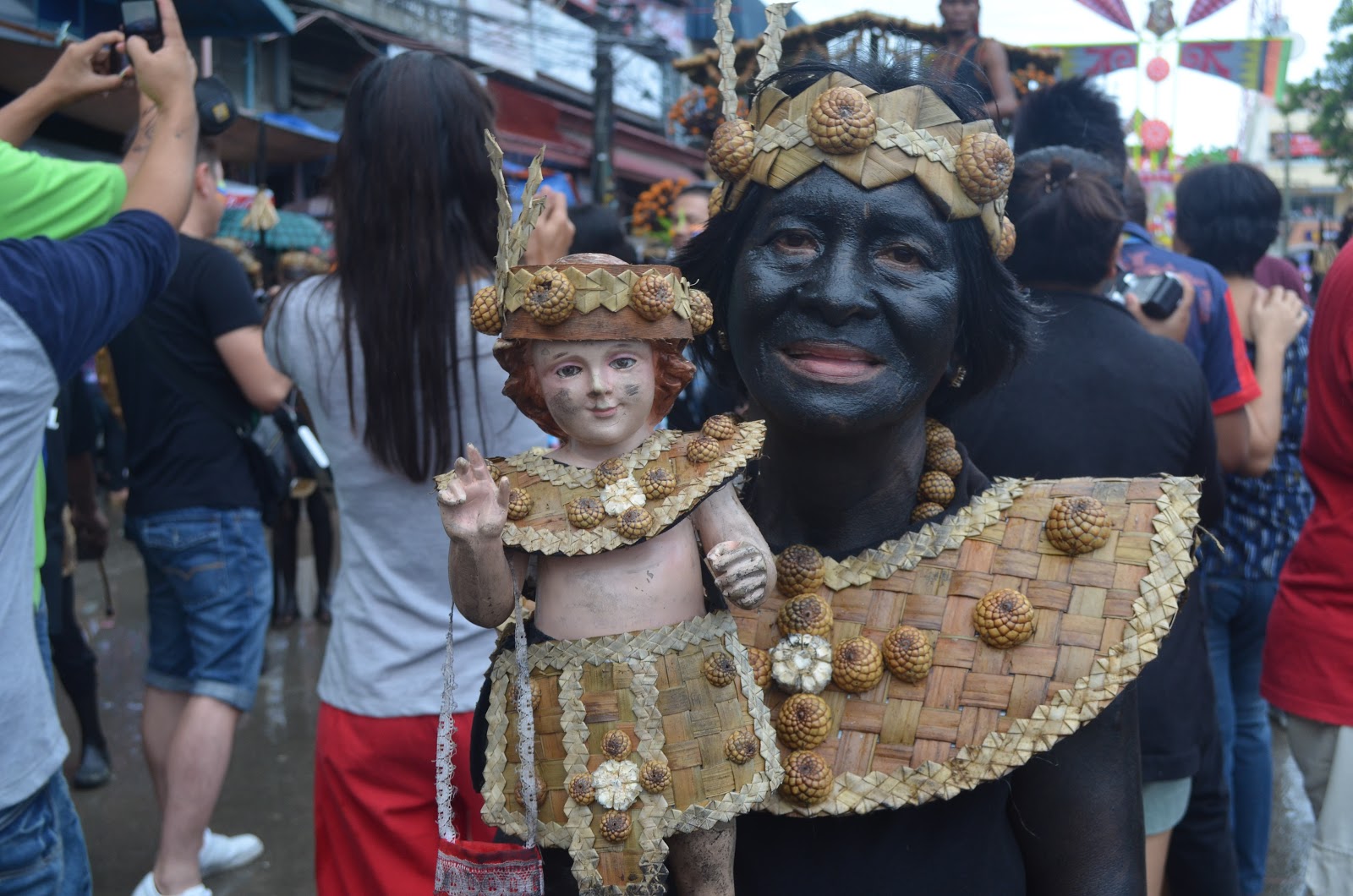
The Ibarajay residents then interpreted the incident as a call for them to seek forgiveness for their sins. They began their penance by blackening their faces with coal and dressing in rags. Interestingly, the piece of wood no longer left the parish after that.
While this is what most people believe in, there is also an urban legend associated to the event.
It is said that the origin of the festival came from what occurred on the year 1200. Ten Malay chieftains or Datus fled from Borneo and arrived to the country’s shores, where they were granted settlement by the hospitable tribes of Panay Island, specifically the Ati people.
The leader, Datu Puti, offered a golden salakot, brass basins and bundles of cloth inexchange for land. As a gift of gratitude, he gave the wife of the Ati chieftain a very long necklace. This was then followed by a simple feast.
There came a time where famine struck the village because of bad harvest. Despite the disaster, the Ati were able to sustain themselves with the aid of food provisions from the Datus. In return, a big celebration was given in honor of the friendship of the two groups. From then on, festivities comes occassionally.
If these were true, then the festival started from paganism as the festive rites include commemoration of their anitos. However, the Spaniards were able to convert the Atis to Christianity, turning the celebration into a religious devotion to Sto. Niño.
• What made Ati-atihan special?
Hailed as one of the oldest in the Philippines, the festival was believed to be the root of Filipino festivities.
As a matter of fact, the National Commission for Culture and the Arts (NCCA) named the Kalibo Santo Niño Ati-atihan Festival as “The Mother of Philippine Festivals.” It was through the Kalibo Ati-atihan festival which brought the creation of other festivals like the Dinagyang of Iloilo and the Sinulog in Cebu, among others.
Also, in the year 2012, the NCCA along with the ICHCAP of UNESCO published Pinagmulan: Enumeration from the Philippine Inventory of Intangible Cultural Heritage which includes the significance of the said festival to the cultural heritage of the country.
And to top all that, it was on 2017 where the Kalibo Santo Niño Ati-Atihan festival was declared one of the 300 best festivals in the world by F300 and EverFest, two digital festivals known globally for discovering communities.
• Let’s join the party!
Here’s what to you’re likely to encounter for the yearly Ati-atihan festival:
— If you want the grandest of all celebrations, book a hotel ahead of time to Kalibo. Expect that many people will be coming to the capital to celebrate the most awaited event.
— First things first, a solemn eucharistic celebration is carried out to formally start the festival proper. People attend masses for the Santo Niño, wnich deeply emphasizes the festival’s religious event.
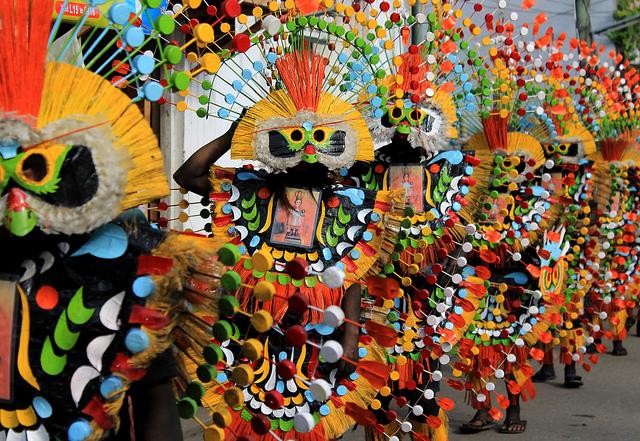
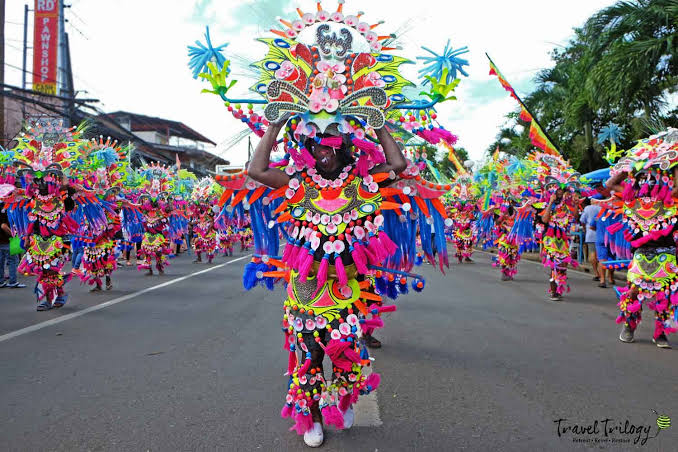
— A procession then follows, accompanied with rhythmic drumbeats, and street dances. The Ati-Atihan is not a spectator event, which means that, yes, you can dance with the Atis as if you’re one of them. Dance to your heart’s content!
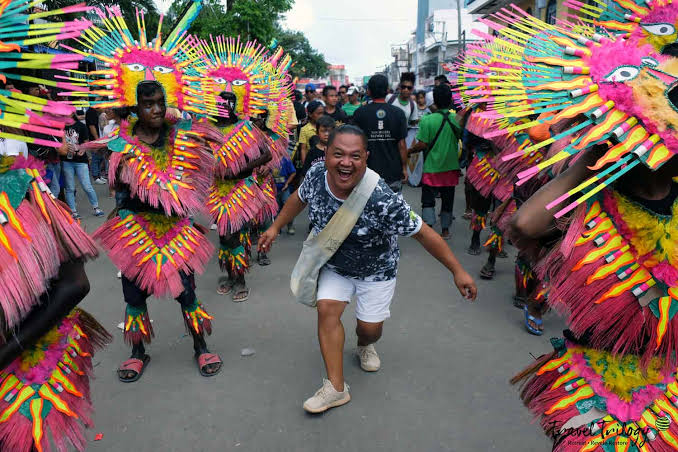
— Sadsad means dance in Aklanon. However, during the festival, it denotes the time to group together and battle out on the streets. It’s a tradition for friends, families and organizations to parade in their vibrant and colorful costumes.
— The second day begins at dawn with a rosary procession, which will then end with a community mass procession.
— The festival is a week long celebration, a week of street dancing and various programs, hence the famous “Hala Bira, Pwera Pasma” phrase or song was made.
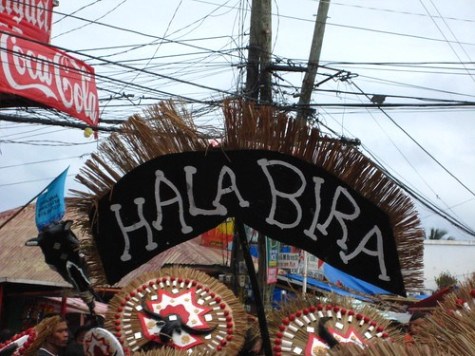
— Expect people to dance for hours and days during the festival, as they believe that Sto. Niño will not let them get sick. “Hala Bira” means go dance while “Pwera Pasma” means without pasma. One can often hear chants of “Hala Bira” between drumbeats.
— The practice of paeapak or pahilot is present as well! An image of Sto. Nino de Kalibo would be rubbed on anticipating devotees while they whisper prayers of healing. They believe that the miraculous Child Jesus will protect them from harm and illness.
— The highlight of the festival occurs on the last day, the very third Sunday of January, when groups representing different tribes fight not only for the dance prizes but also for the tourists’ attention.
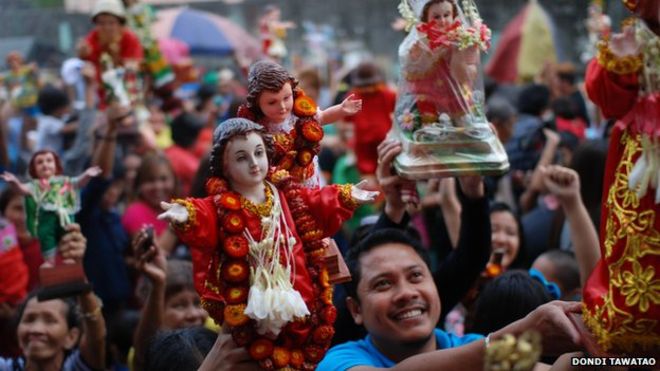
— The festival ends with a procession of thousands of people carrying torches and different kinds of images of the Santo Niño. The contest winners on several programs are announced at a masquerade ball which officially ends the festival.
• What is it to expect from a small-town celebration?
Its impact.
While there are mostly parties happening everywhere, the faith shown by visitors and locals on the Sto. Niño are indeed evident and continues to reach out to others.
Let’s clap our hands for the authenticity, cultural significance, faith maintenance and fun brought by such a festival. It truly becomes difficult not to get pulled into the action so don’t you just stare there from behind the screen!
Come to Kalibo, Aklan and prepare yourself for the trip of a lifetime!
A trip of uniquely Ati-Atihan. Uniquely, Filipino.
 Tara Travel!